Turning customer needs into AI-powered admin skills
We explored how AI could make everyday user-management tasks easier — not by starting with what AI could do, but by starting with what customers were already asking for.
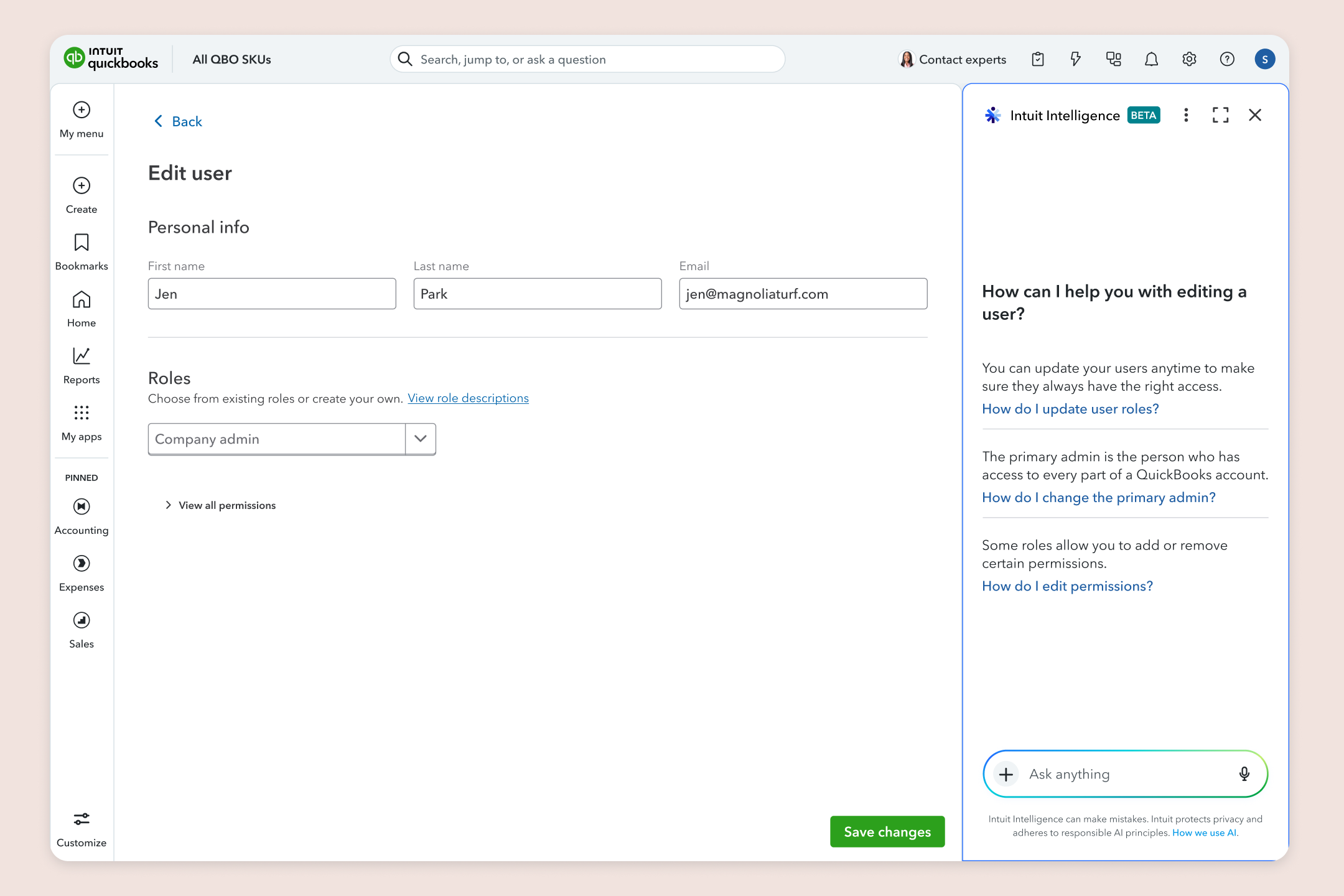
Starting with customer needs.
Across multiple Voice of Customer inputs, recurring themes emerged: customers knew what they wanted to accomplish, but often struggled to find the right place, understand the steps, or complete common administrative tasks efficiently. The opportunity was to turn those repeated needs into focused AI skills that could understand intent, gather the right information, and safely help customers take action.
Rather than designing a general-purpose assistant first, we reviewed recurring customer requests and looked for tasks that were specific, repeatable, and valuable enough to automate.
One example was inviting an accountant. The workflow already existed in the product, but customers still needed help finding it and completing it. We used that need as a starting point for defining an actionable AI skill.
The question became: how might AI move from explaining what to do to safely helping the customer do it?
Designing the Invite Accountant skill.
The experience had to understand the difference between someone asking how to invite an accountant and someone asking AI to do it for them.
When the customer wanted to take action, the skill collected only the information it needed — name and email — and asked only for information that was missing. Before anything changed in the account, the customer saw a clear approval step with the accountant, company, role, and email being used. Only after explicit approval could the invitation be sent.
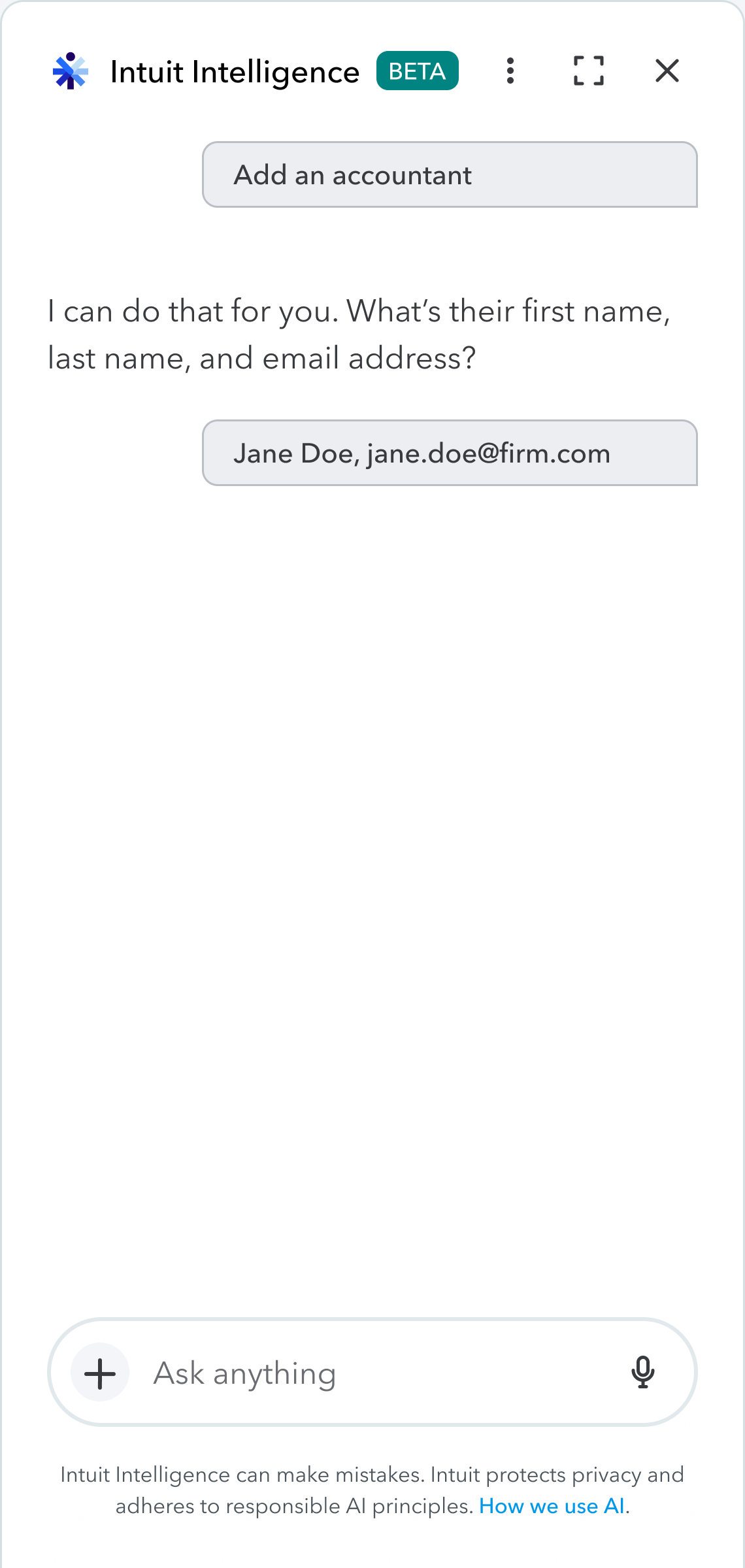 Collect details
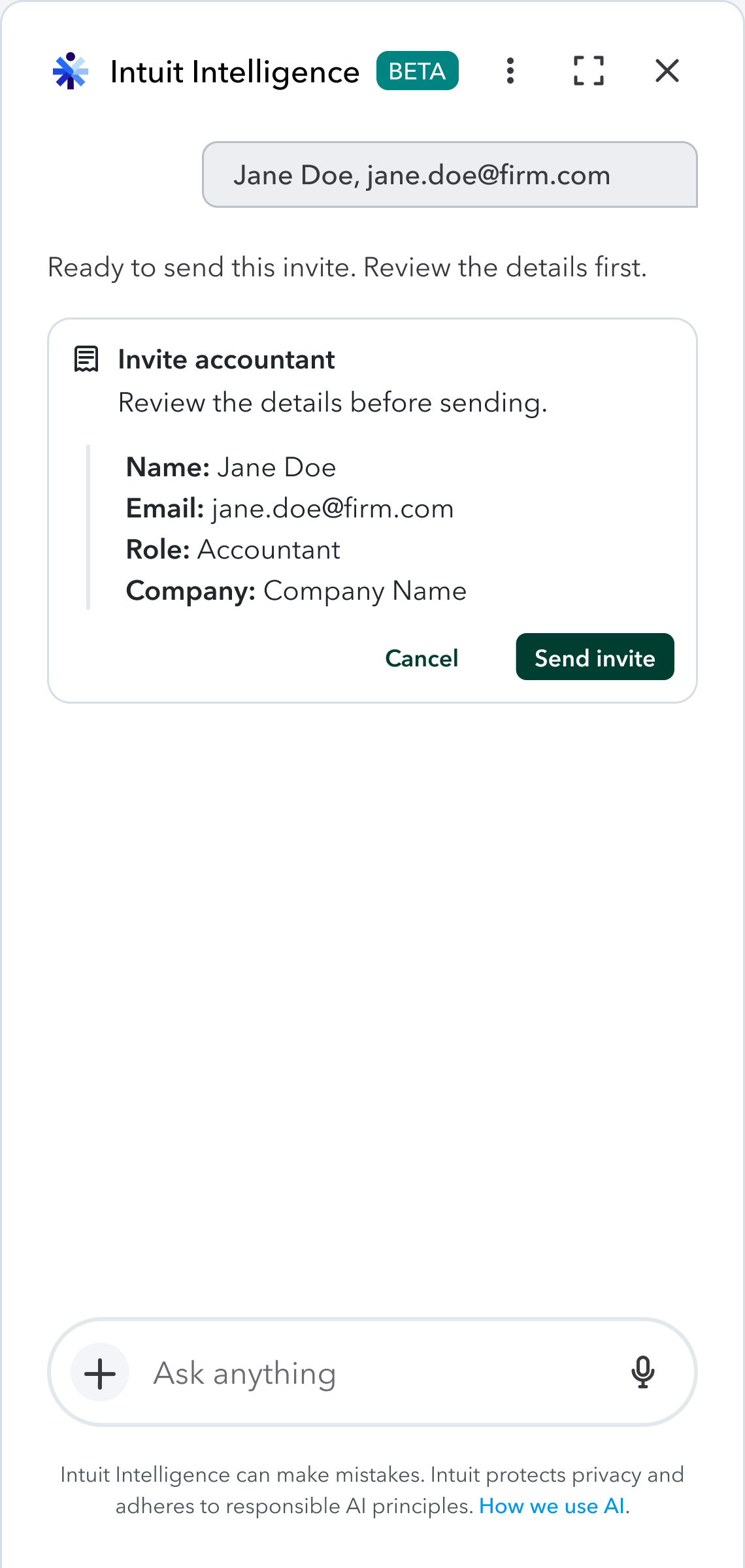 Approve before anything changes
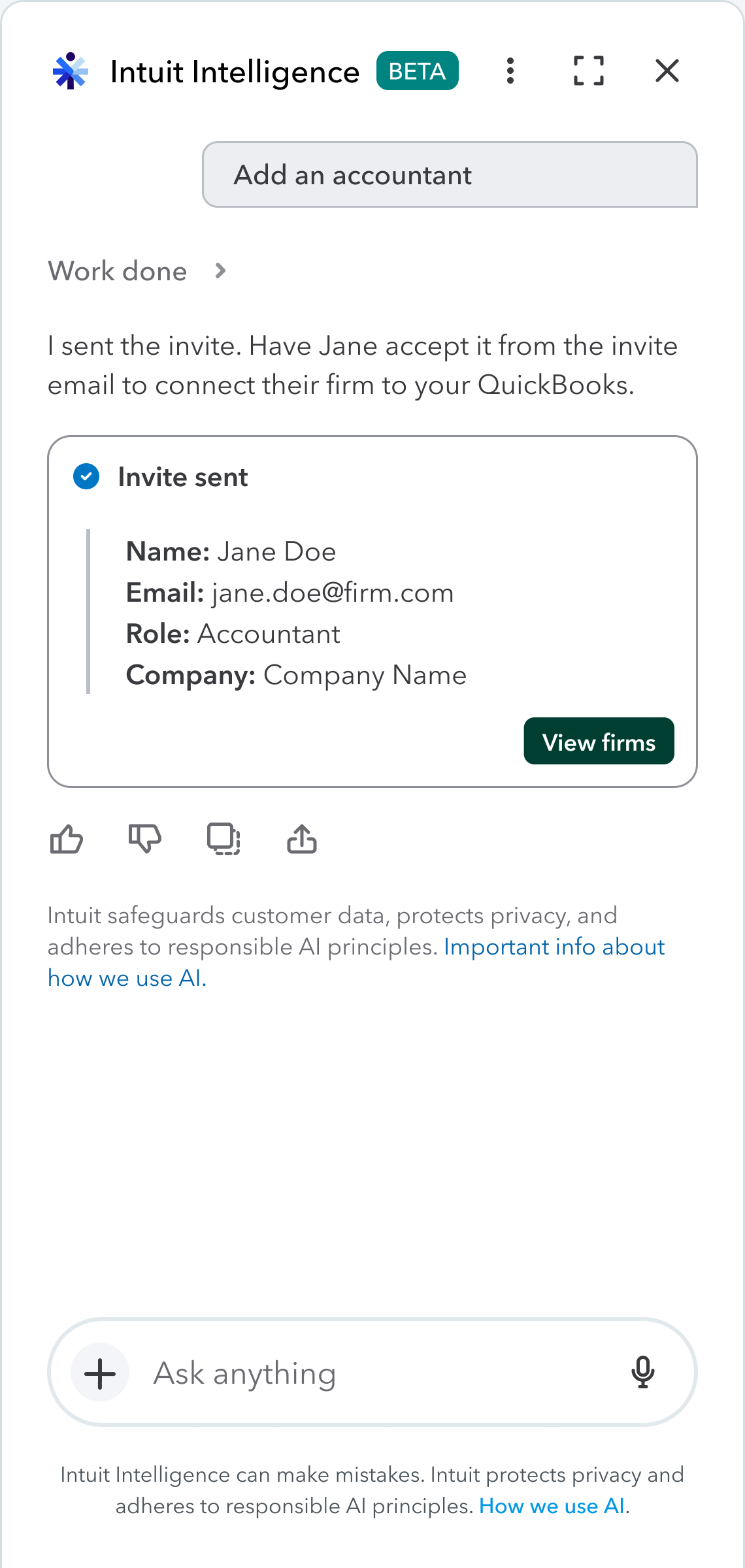 Sent: proof of work
Keeping the customer in control.
Because the skill could change account access, we designed the interaction around control rather than unchecked automation. The system needed to:
- never guess missing identity information;
- validate information before taking action;
- show exactly what would happen before it happened;
- require customer approval;
- prevent duplicate submission;
- confirm the result after the action completed.
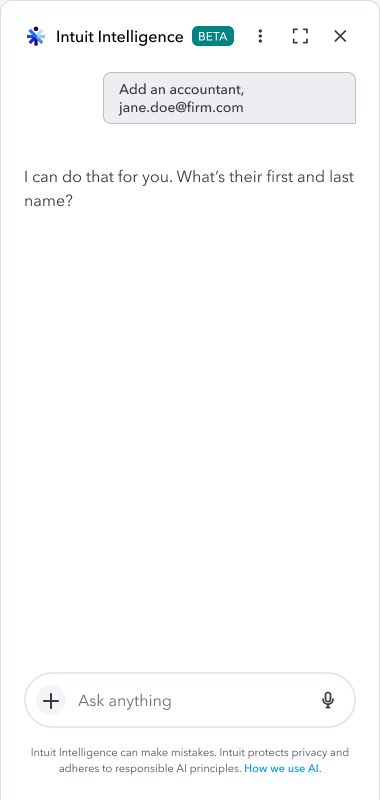 Asks only for what's missing
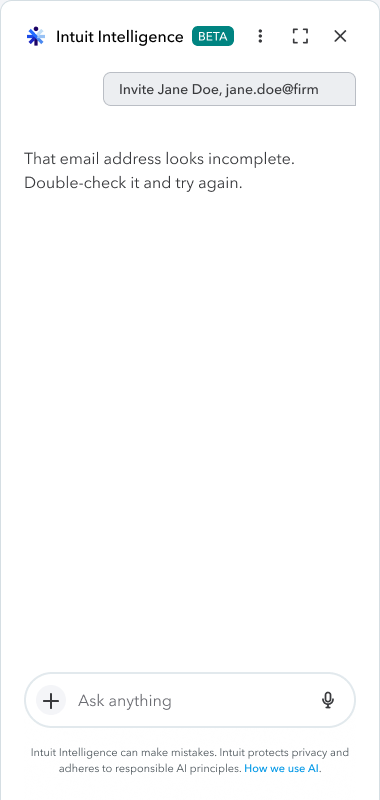 Catches a bad email before acting on it
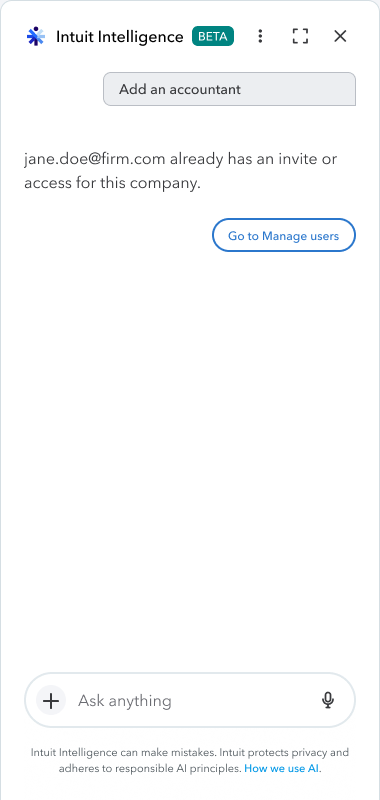 Prevents a duplicate invite
After the invitation was sent, the experience returned proof of work so the customer could understand what happened and the current invitation status.
Task-based AI that gets real work done.
Invite Accountant was one example of a larger approach. Voice of Customer helped us identify the problems worth solving. The AI skill translated those needs into a repeatable interaction model:
This shifted our thinking away from building a chatbot and toward designing task-based AI that could help customers get real work done while keeping consequential actions understandable and controlled.
I helped translate customer needs into AI use cases, shape the end-to-end interaction model, define the approval and confirmation experience, and work across product and platform constraints to prepare the skill for implementation.
Curious about the details behind this?
Happy to walk through the research, the alternatives I ruled out, or how this connects to the wider identity platform work.