Scaling user management for Intuit Enterprise Suite
How a seemingly simple access problem exposed the need for a more scalable enterprise foundation. I led the product-design work from the initial customer request through to a shared, reusable user-management system.
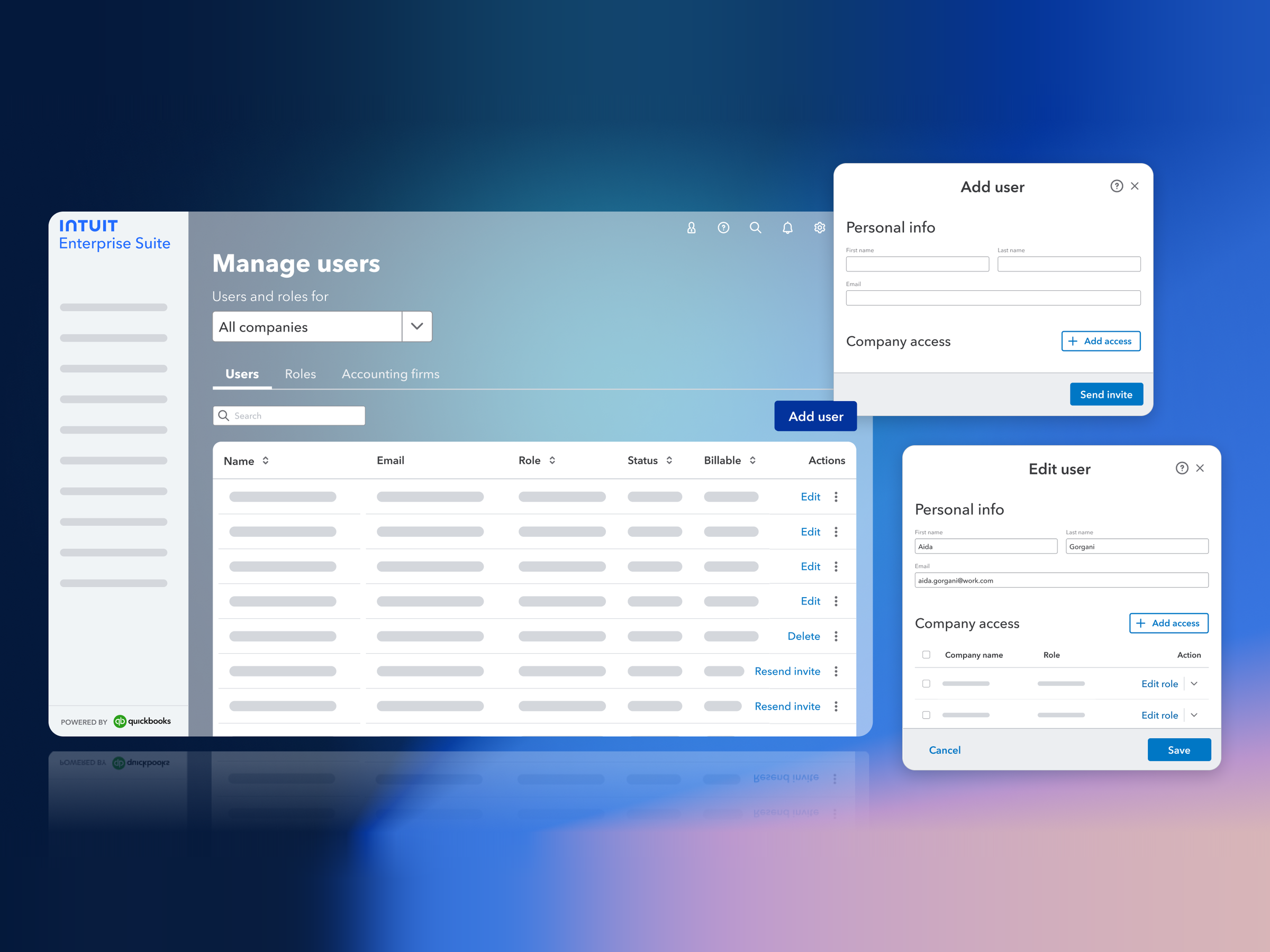
Managing access to one company and to many is not the same problem.
Intuit Enterprise Suite serves businesses that operate as multiple related companies, and that creates a very different user-management problem than a single business. Administrators need to manage the same people, roles, and access across many companies while keeping everything understandable and consistent.
One gap made that complexity especially visible: administrators couldn't easily give an existing user access to additional companies. Instead, they had to work around the system through the "add a new user" flow, creating friction and the risk of inconsistent user information and roles.
 Managing people, roles, and access across many related companies.
A deliberate bridge, not the final architecture.
The obvious answer was to extend the existing Edit User experience so administrators could add company access directly. Customers needed that relief now, while rethinking the entire system would take significantly longer — so I designed an interim fix that removed the immediate blocker while staying familiar to existing users. We treated it as a bridge, not a destination.
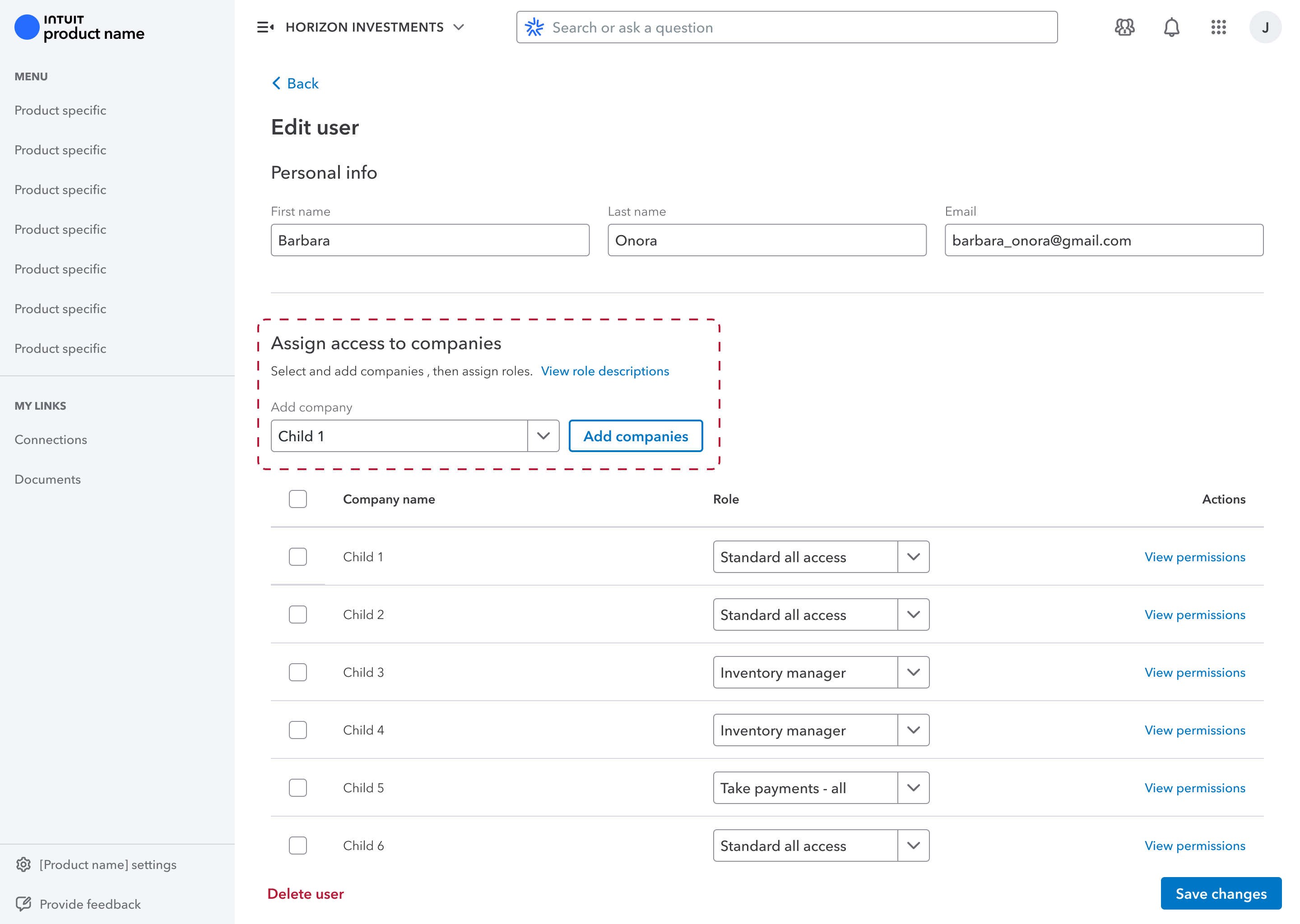 The interim fix: add companies directly from Edit user.
The question changed from "add a control" to "rethink the model."
As the work progressed, it became clear the challenge wasn't just adding another control. The existing experience was carrying more responsibility than it had originally been designed for — viewing, editing, company access, and roles all tightly combined into a single flow. What worked for simpler businesses became harder to scale for enterprise administration. Research reinforced the direction: more focused workflows made complex access-management tasks easier to understand and complete.
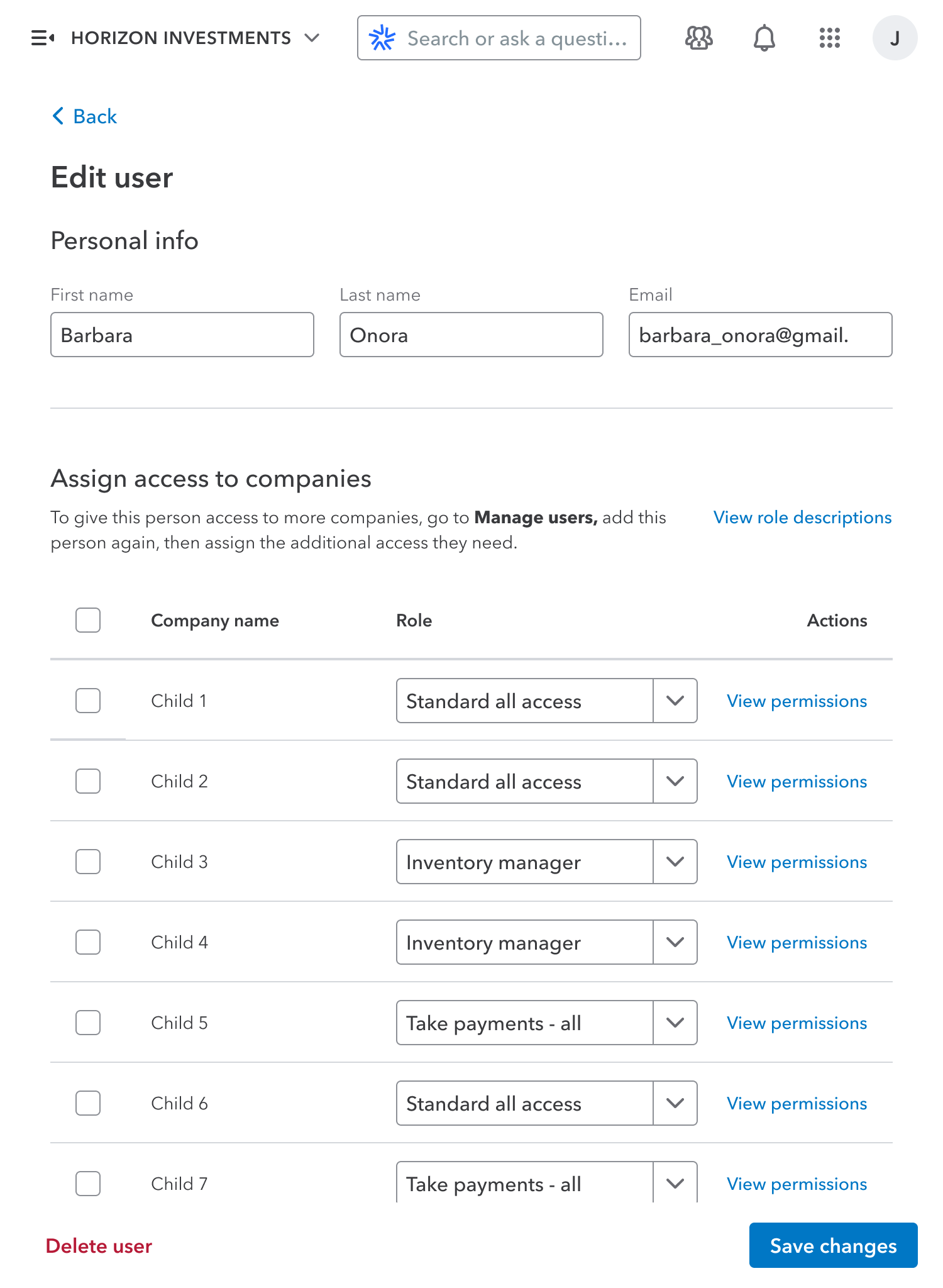 Current state
No way to add companies to an existing user — admins had to delete and re-add them, risking inconsistent records.
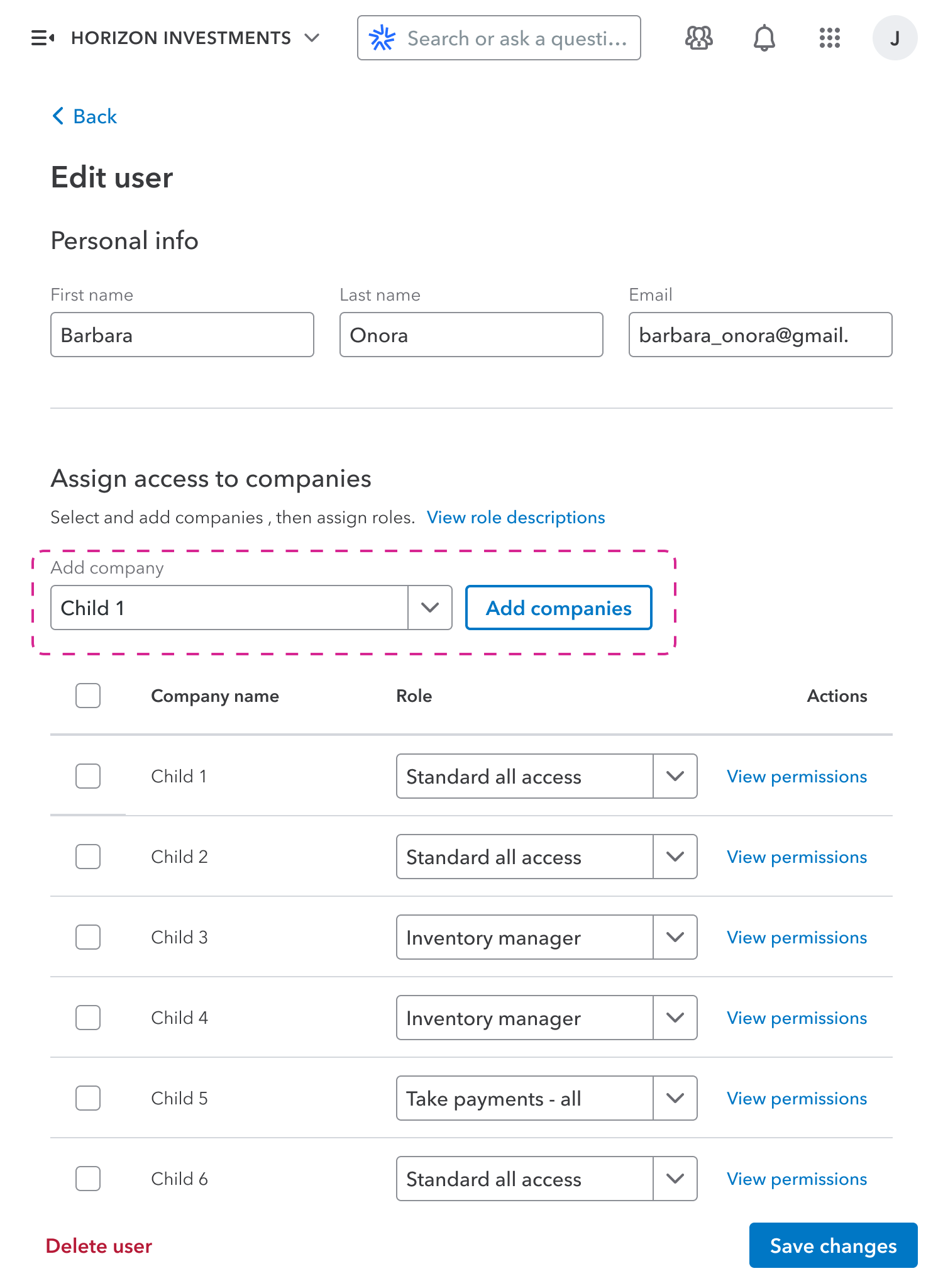 Short-term solution
A bridge: an Add companies step on the same screen, for quick relief — but still one combined, all-or-nothing flow.
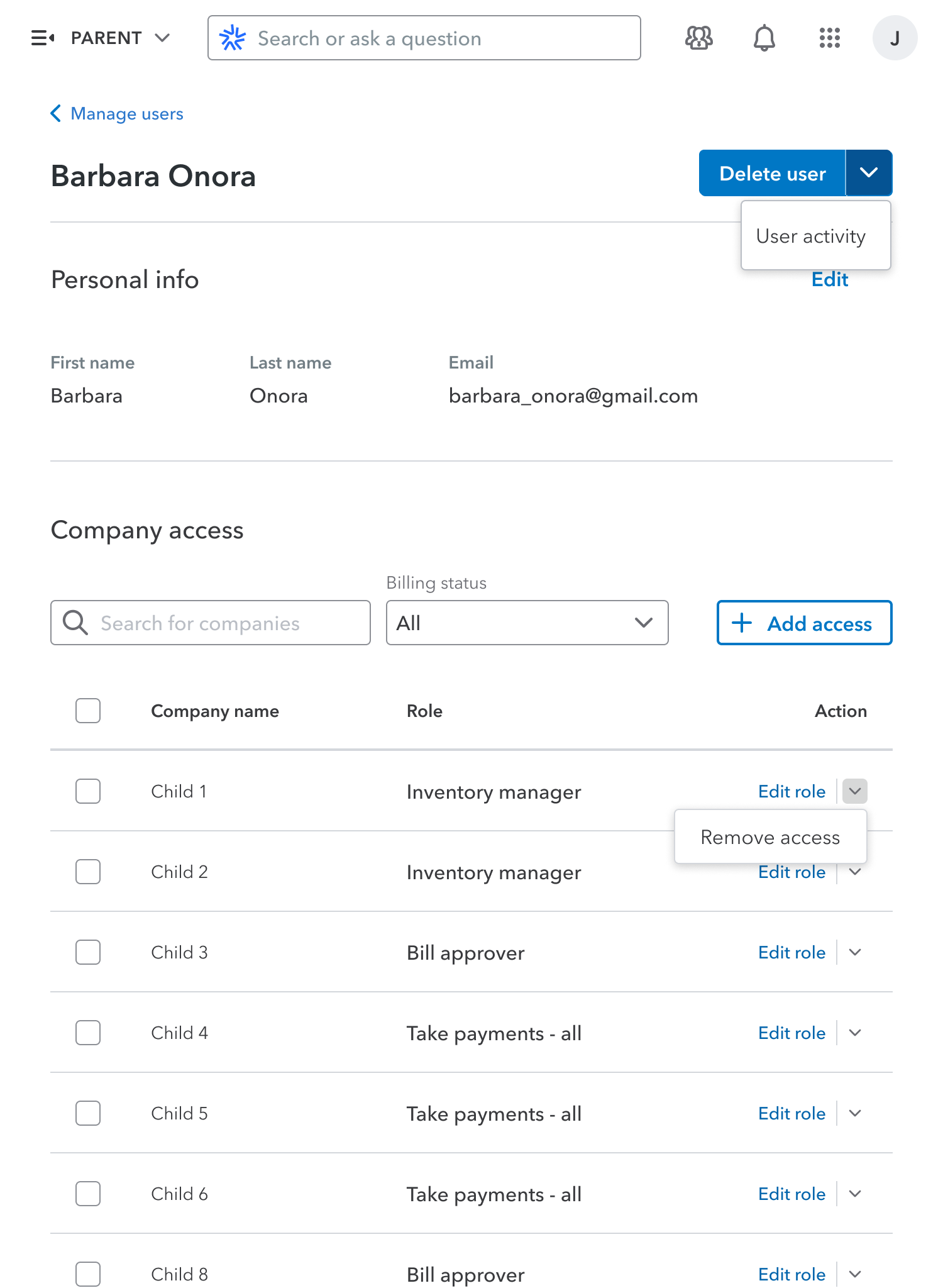 Target state
Split into View and Edit, with company access managed on its own and each action saving independently — built for scale.
The realization: Add user and Edit user were one tightly coupled widget, and the personal profile section inside it was shared across multiple products and SKUs. A change made for one product — even a small one — could ripple into every other product sharing that same widget.
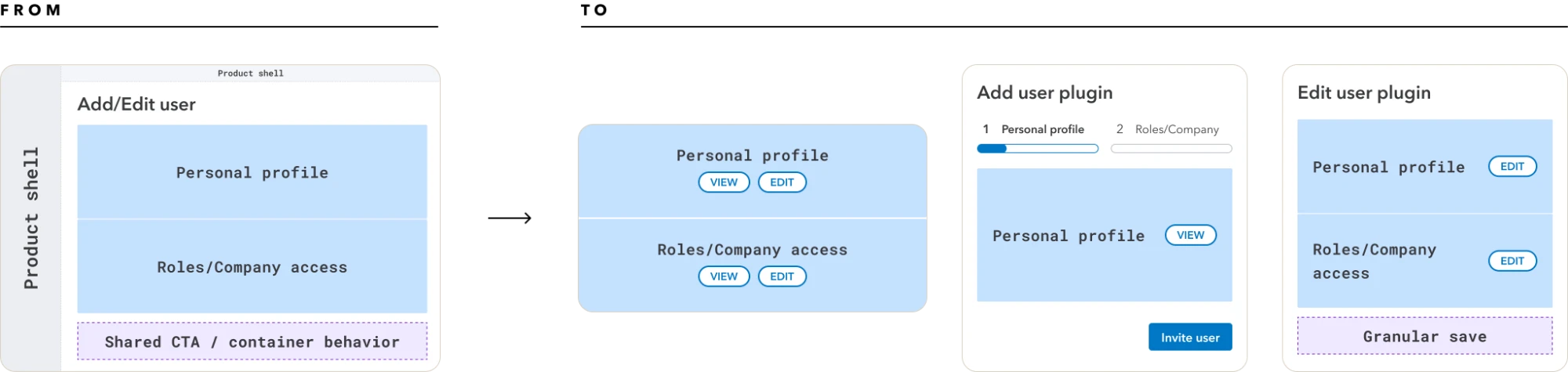
From one coupled system to focused, reusable actions.
The work evolved into a broader redesign of the shared user-management foundation. Single-company and multi-company customers had been sharing one codebase with branching logic throughout, so every change meant re-testing both paths to rule out regressions, and the browser loaded all 31 files regardless of which one a customer actually needed. Splitting that into two focused, independently testable plugins cut the bundle to 7 files — an 85% reduction — and meant a change to one no longer put the other at risk. It also meant every user-management action could become its own composable widget, invokable from anywhere in the product instead of being locked to the manage-users page.
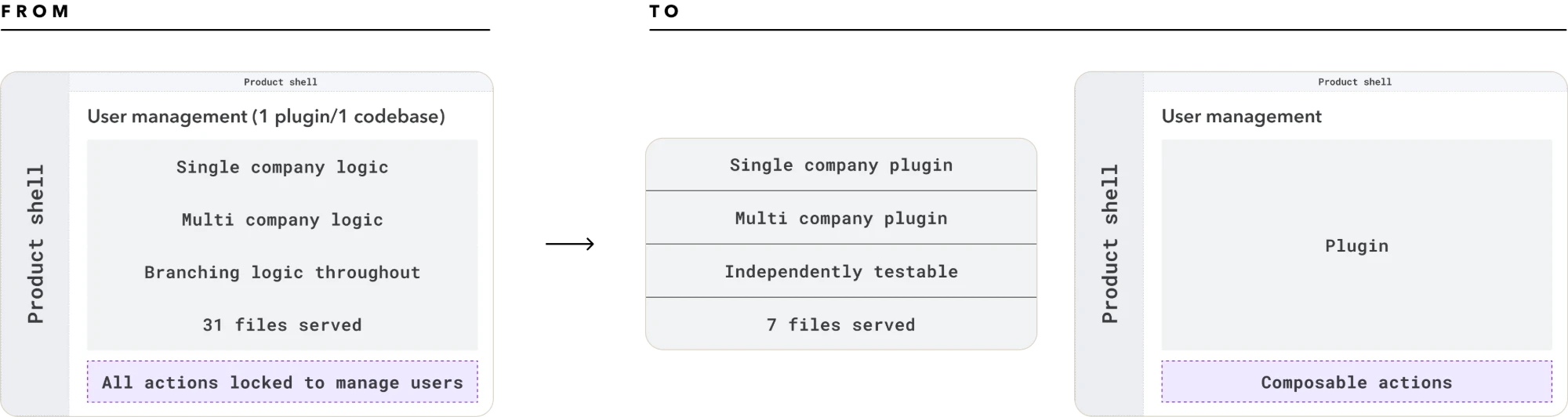
A feature request that changed the direction of the system.
The immediate work closed an important multi-company access gap for administrators. More importantly, it changed the direction of the system — what began as a feature request became the catalyst for a more modular user-management model designed around enterprise scale, clearer workflows, and future reuse.
The most important outcome wasn't the feature we added — it was recognizing that the feature request was evidence of a larger systems problem. We delivered immediate customer value without treating the short-term workaround as the long-term solution. That balance, solving today's problem while protecting tomorrow's product foundation, became the defining design challenge of the work.
I led the product-design work across the original access problem, the interim solution, the research, and the evolution toward a more scalable user-management foundation. I partnered with product, engineering, research, analytics, and platform teams to translate complex multi-company requirements into clearer customer workflows and reusable system patterns.
Curious about the details behind this?
Happy to walk through the research, the alternatives I ruled out, or how this connects to the wider identity platform work.