I design
complex
systems that hold up
at scale — for millins of people.
Senior Product Designer with six-plus years across identity, AI, and security — a generalist who finds where a system breaks under scale, then rebuilds it so nobody has to think about it.
Three chapters, one throughline.
Freelance and early-stage startups taught me to own a problem end to end. U.S. Bank and Intuit taught me to do it at the scale of millions of people.
Learning the craft with no guardrails
Before i2Chain, I freelanced and worked across several early-stage startups — small teams, few resources, and full ownership of a problem from research through shipped screen. i2Chain is where that turned into founding a design practice from scratch: first sketch to funded product for a secure enterprise document platform.

Taking that instinct into the enterprise
Three roles, one bank: architecting the conversational system behind an AI assistant used by millions of customers, building the design system its alerts run on, and redesigning notification settings well enough to move an external rating from Fair to Good.

Now, the platform underneath everything
Leading identity and access architecture for QuickBooks — the layer that decides who can do what, for businesses ranging from two people to a thousand-entity enterprise. Plus early work on how AI assistants should handle high-stakes access decisions.
Three projects on the identity platform.
Architecture, enterprise scale, and business continuity — the case studies that show the range.
Scaling user management for Intuit Enterprise Suite
A seemingly simple access request exposed the need for a more scalable enterprise foundation. I led the design work: a scoped interim fix to unblock customers, then a shared foundation built for both simple and complex organizations.

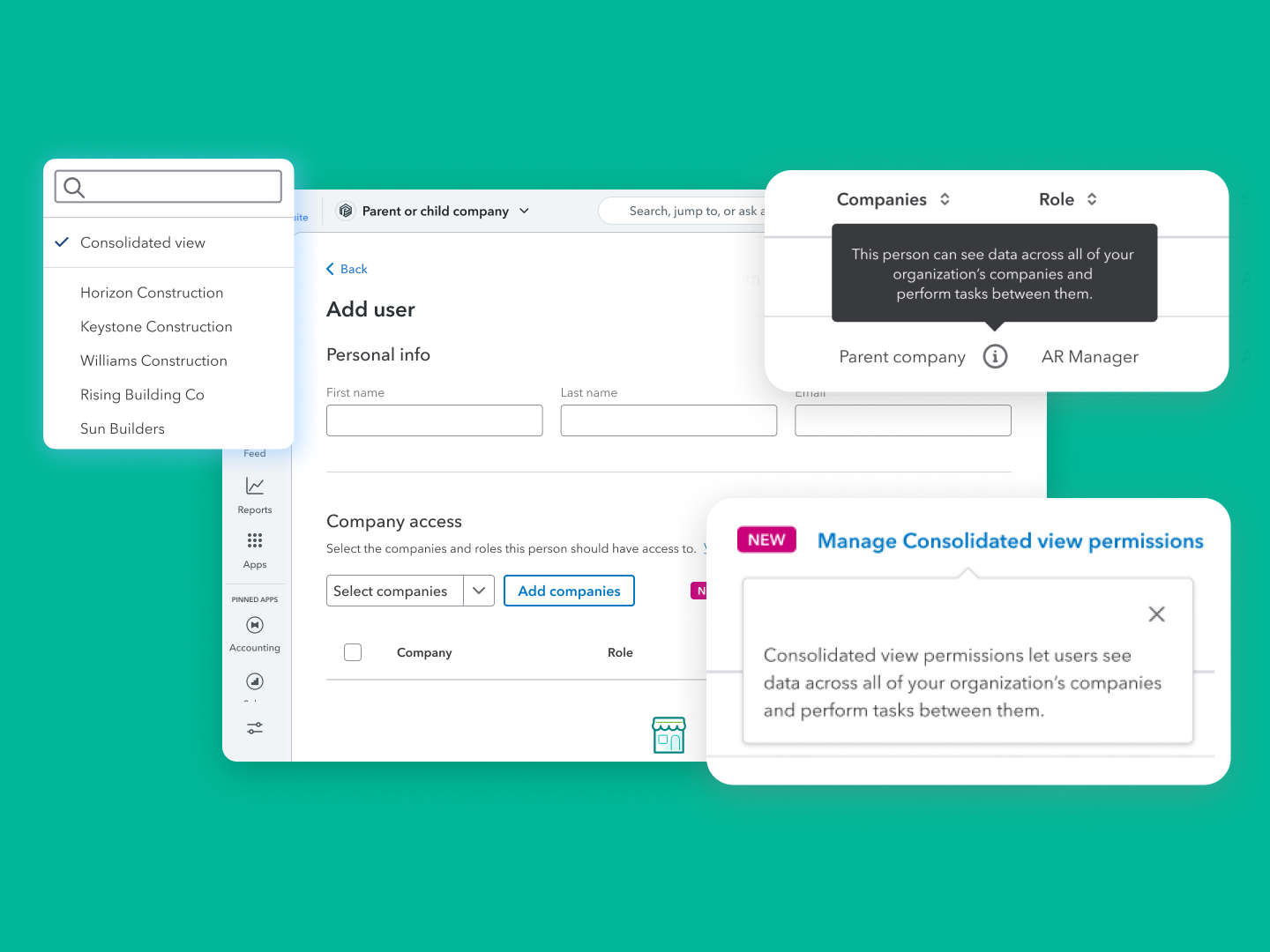
Designing a bird's-eye view for multi-company finance
Consolidated View gave finance teams a way to see and work across many related companies at once — but that meant rethinking what "access" had to mean. I designed a focused access model and a client-to-firm delegation flow so the view could scale safely to internal teams and outside accounting firms alike.
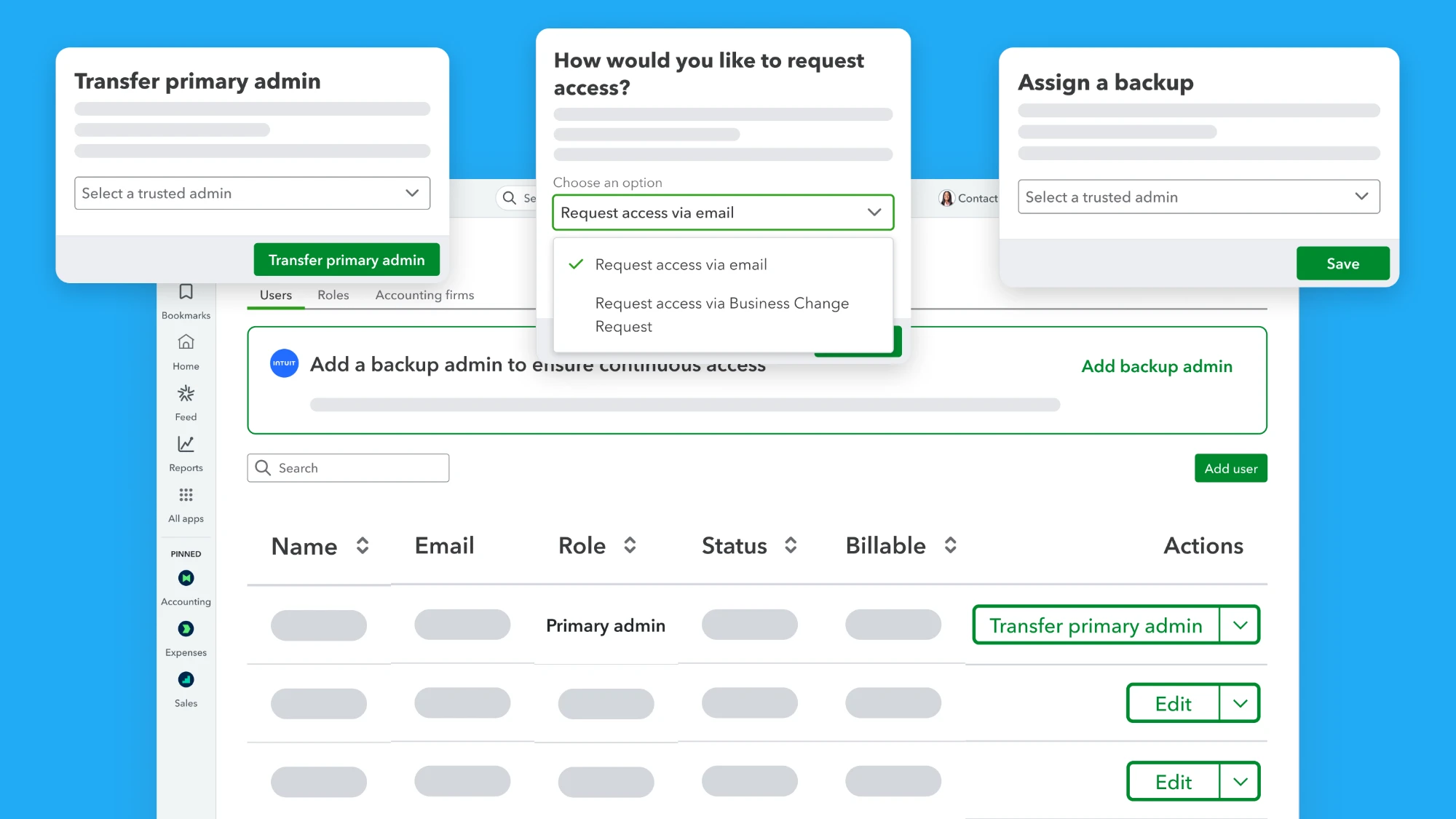
Designing for business continuity in QuickBooks
QuickBooks businesses often depend on one Primary Admin with the highest level of account control. I led the design work to make transferring that responsibility more visible and give administrators a clearer path forward when access breaks down.
The rest of the range.
Six more projects across conversational AI, cross-org strategy, enterprise design systems, and building a product from zero.
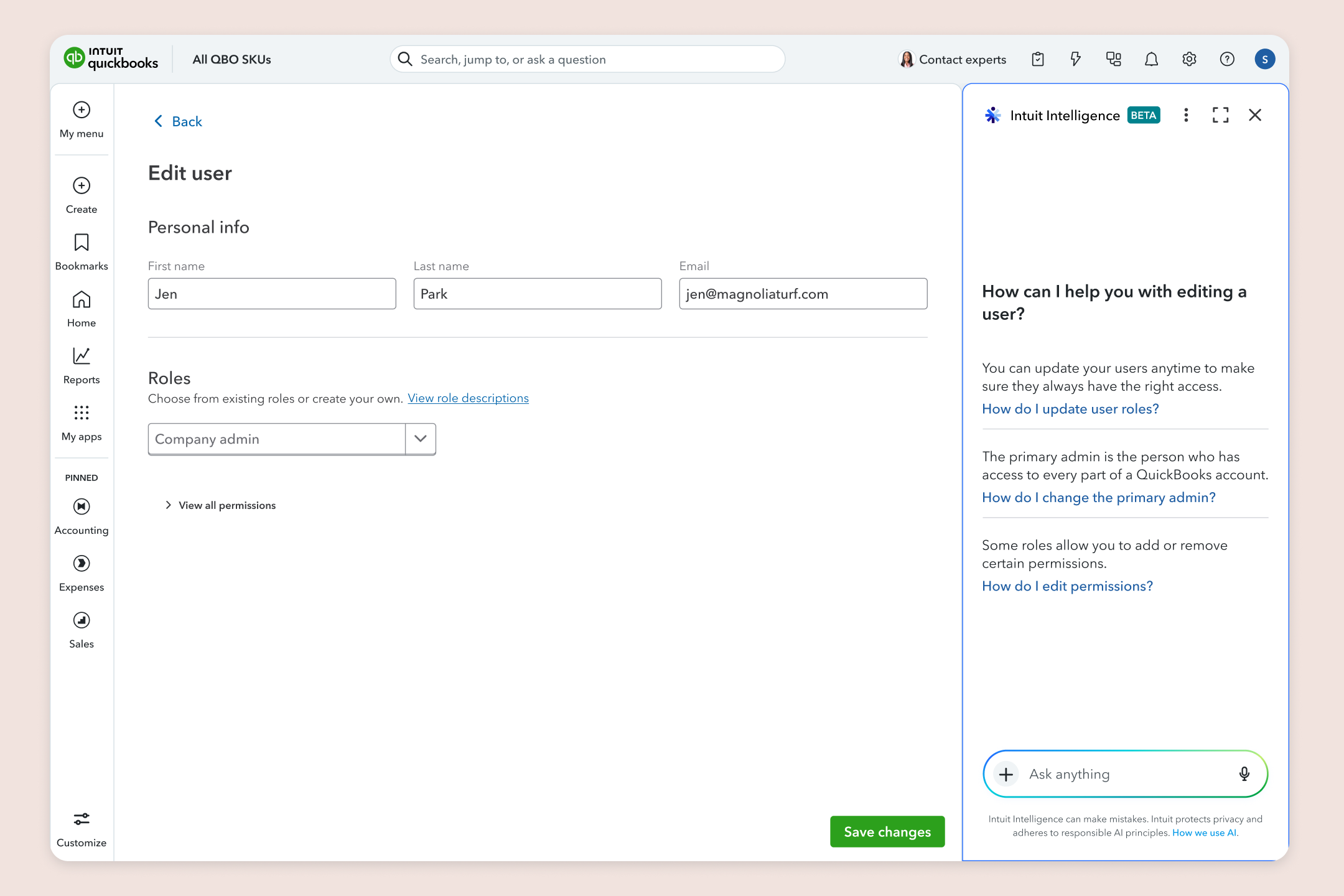
Designing AI that can take action
Moving user management from navigation-heavy workflows to conversational, action-oriented AI skills — with the customer still in control.
Creating one trusted business profile
Shared business information wasn't managed as one coherent profile across products. I led the audit and reframing that pointed toward a more unified model.
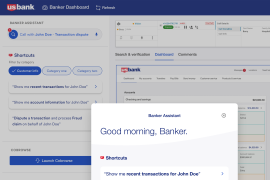
From customer assistant to banker copilot
Extending a conversational banking model built for customers into banker-facing workflows — search, learn, do.
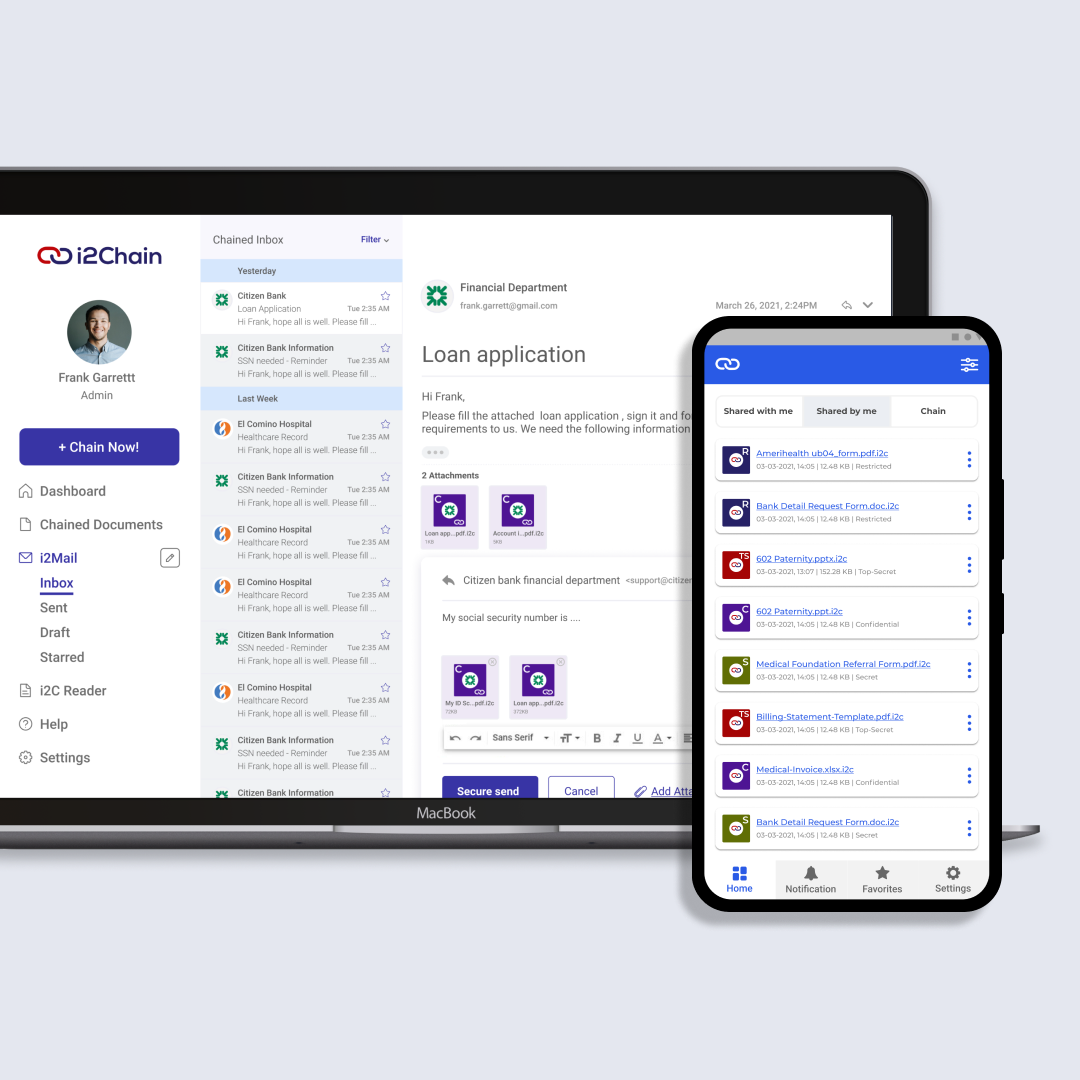

Enterprise document platform, 0→1
Led design from first sketch to funded product, plus the company's first design system.
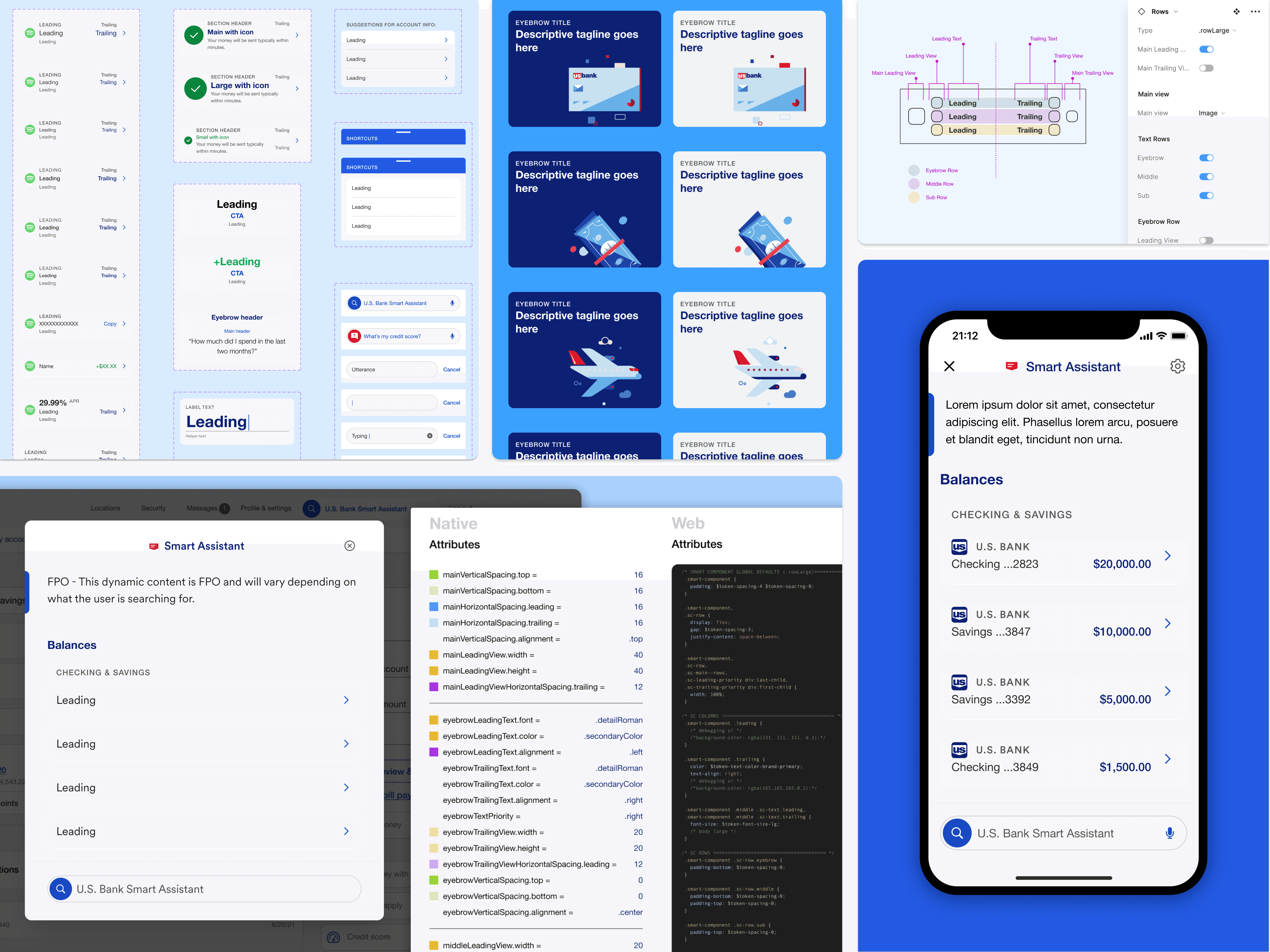
Scalable Design System
Developed a scalable design system that streamlined feature development, improved design consistency across platforms, and significantly accelerated deployment times.
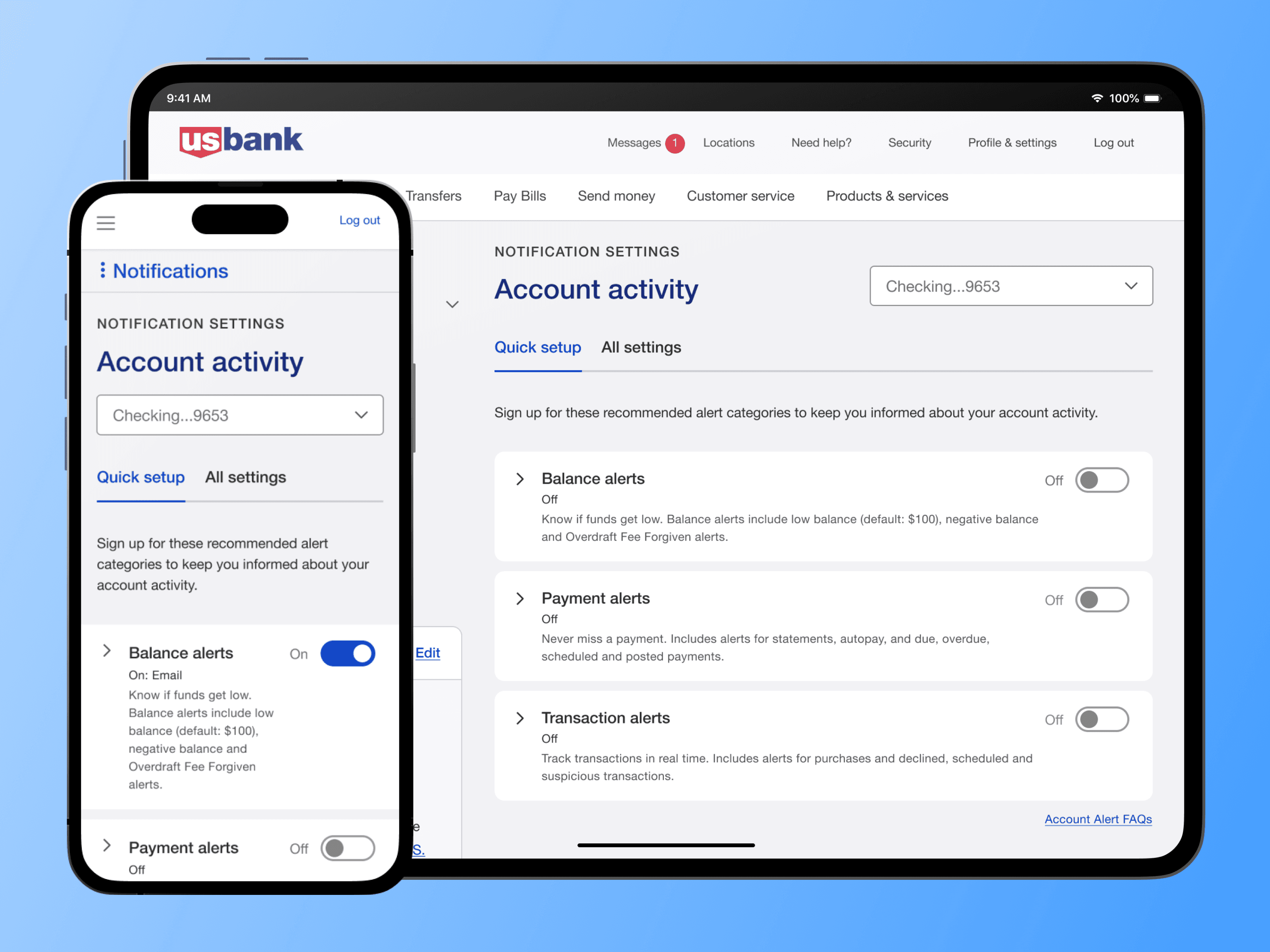
Notification settings revamp
Redesigned the alert management system, moving the product's Corporate Insights rating from "Fair" to "Good."
The judgment behind the output.
How I approach a platform problem, from framing to measurement.
I started as an engineer, and I still read a problem that way — I want to know what the system actually does before deciding what it should look like. Most of my work lives where the design problem and the technical problem are the same problem, so I name that out loud even when it makes the scope bigger.
The other half of the job is getting a room of people who don't report to each other to agree. Platform work fails on alignment more often than it fails on craft — so I run the audits and workshops, and build the prototype that makes the abstract concrete.
Priority comes from evidence
Support volume, conversation data, VOC — not from assumption about what customers want.
Design the options you expect to lose
I explore the alternatives I'll be asked about, so the recommendation arrives with reasons rather than taste.
Design for the measurement, too
If you can't tell whether it worked, it didn't ship. Flows should make the analytics tell the truth.
Build it reusable
The best platform work makes the next five things easier. I'd rather ship a foundation than a feature.
I'm looking for my next platform problem.
If your team owns something foundational — identity, access, permissions, or an AI layer touching high-stakes decisions — I'd like to hear about it.